
System description
How does a waste incineration plant work in detail? Which technologies are used? We provide detailed answers to these and many other questions below.
Passionate about locally sourced energy
The GMVA has four separate incineration lines. These each consist of the components material feed, grate with firing system, steam generator and a complex flue gas cleaning system. Each line incinerates between 20 and 25 tons of waste per hour.
The total capacity of the plant is 2,100 tons per day. Extrapolated to 365 days, that is more than 700,000 tons. Energy recovery from waste generates 430,000 MWh of electricity and up to 150,000 MWh of heat energy annually. The process produces 170,000 tons of slag as a byproduct, which can be used as a substitute building material, for example in road construction. Piled up on a soccer pitch, the material incinerated each year would form a mountain
200 meters high.
Safety first – always keeping everything in view and in full control.
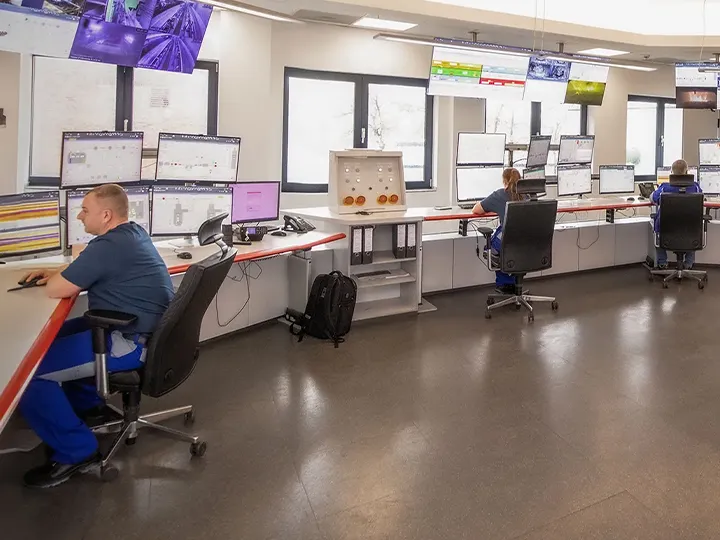
Nothing happens unobserved in the incineration plants. All processes are seamlessly monitored by our specialists – 24 hours a day, 365 days a year. All measured values from boiler operation and flue gas cleaning come together in the central control room. The specialist personnel working in shifts permanently monitor, record and analyze all process data and then archive it. If necessary, immediate intervention in the plant control system takes place directly from the control room. However, it is not just us who have a live view of our plant at all times, but also our responsible monitoring authority, the Düsseldorf district government. The emission values are transmitted to them online via a dedicated line.
The combustion process at a glance
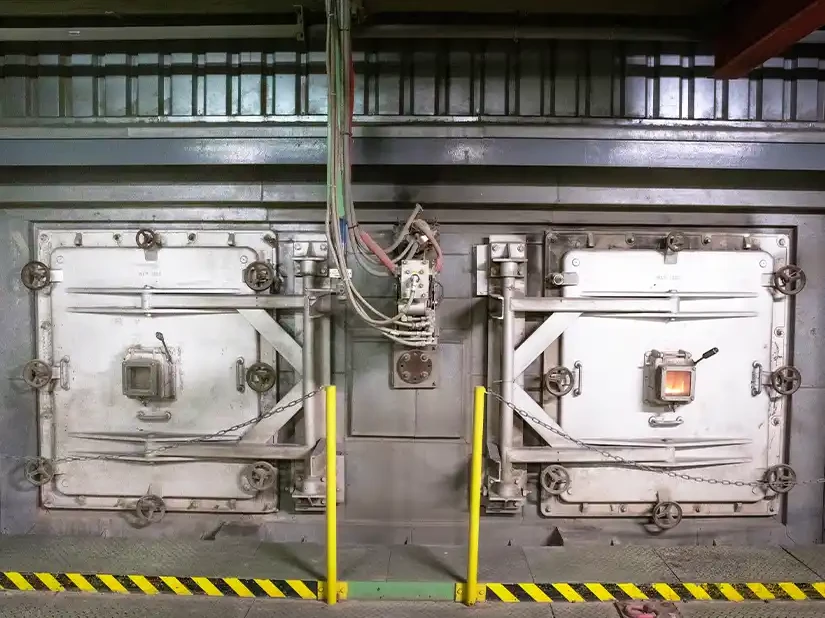
The GMVA incineration plant consists of four boilers, each with a downstream five-stage flue gas cleaning system. After delivery by the appropriate vehicles, the waste is homogenized (shredded and shaped into processable units) using a crane grab. It is then fed into the respective boiler, from where it is fed into the incinerator via a hydraulic pusher.
The waste is transported through the individual combustion zones by means of slowly rotating roller grates: Drying, degassing, ignition, main combustion zone and burn-out zone. Temperatures of over 1,000 °C prevail in the main combustion zone. The slag remaining after incineration is only 8 % of the original volume and contains less than 1 % combustible components.
We make incineration a responsible thing.
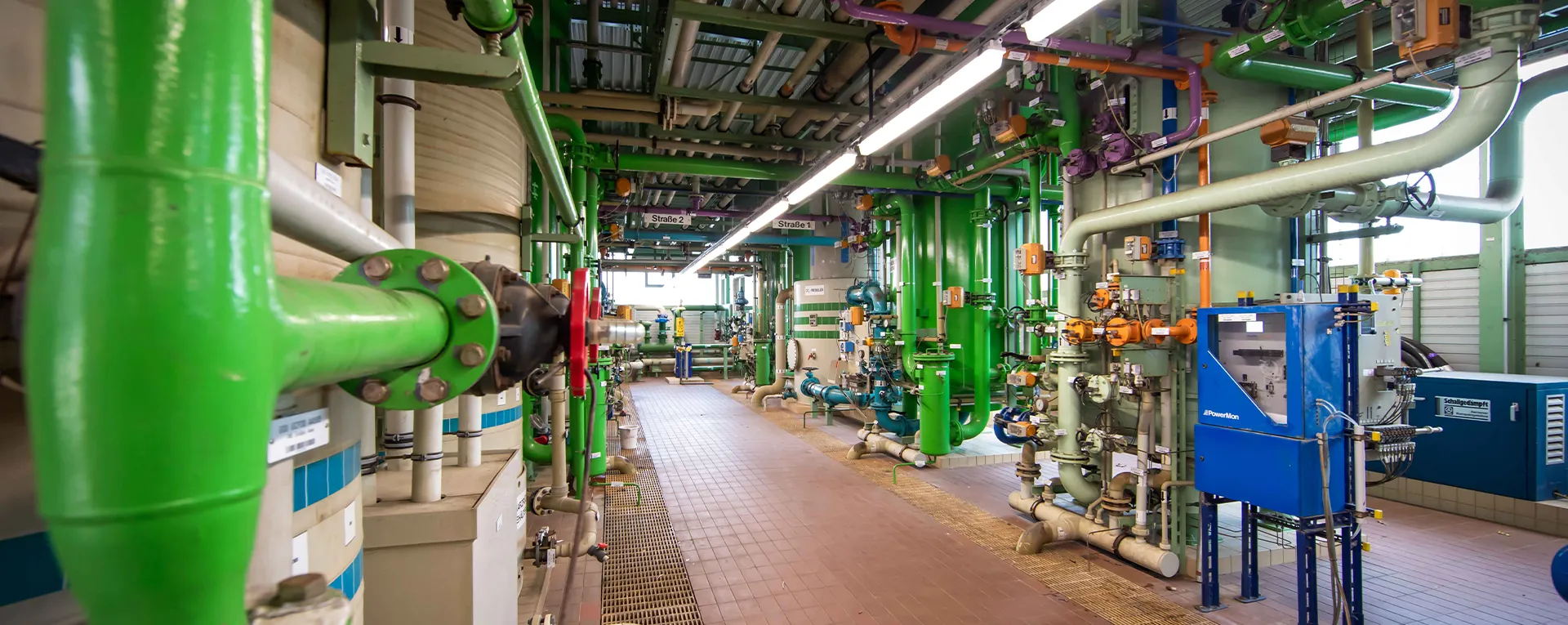
But the combustion process alone is far from the end of the work. At least as important as generating energy is the consistent reduction of emissions through state-of-the-art filter technology. This immense importance is also reflected in terms of space: the complex flue gas cleaning system accounts for around 65% of the enclosed space in the entire GMVA.
Here, the gases produced during combustion are detoxified through several successive process steps and continuously monitored and released in a controlled manner within the framework of legal requirements.